Affichage des articles dont le libellé est agriculture. Afficher tous les articles

5.1.12

Smell experience

Guided by your nose in cities, design and urban planning experienced in a deeper way.
The city enters yours while breathing. And when you open your mouth, your smell is actually solicited too.
Nicola Twilley talks with Victoria Henshaw about fragrances and cities:
http://www.ediblegeography.com/smell-designing-sheffield/
Check this post and all its links!

26.11.11

Henry David Thoreau : Wild Apples: The History of the Apple Tree (1862)


"It is remarkable how closely the history of the Apple-tree is connected with that of man. The geologist tells us that the order of the Rosaceae, which includes the Apple, also the true Grasses, and the Labiatae, or Mints, were introduced only a short time previous to the appearance of man on the globe."

"They must be eaten in the fields, when your system is all aglow with exercise, when the frosty weather nips your fingers, the wind rattles the bare boughs or rustles the few remaining leaves, and the jay is heard screaming around. What is sour in the house a bracing walk makes sweet. Some of these apples might be labelled, "To be eaten in the wind.""


"Thus the cows create their own shade and food; and the tree, its hour-glass being inverted, lives a second life, as it were."


Wild Apples: The History of the Apple Tree (1862)


THE HISTORY OF THE APPLE-TREE.
THE WILD APPLE.
THE CRAB.
HOW THE WILD APPLE GROWS.
THE FRUIT, AND ITS FLAVOR.
THEIR BEAUTY.
THE NAMING OF THEM.
THE LAST GLEANING.
THE "FROZEN-THAWED" APPLE.

Read the full text:
http://www.gutenberg.org/ebooks/4066


Read more:
http://en.wikipedia.org/wiki/Henry_David_Thoreau

6.11.11

Breeding hybrid fruits

Making hybrids. Scary though interesting ideas.
Like the Pomato (Potato + Tomato) which roots and fruits are both growing common edible on the same tree.

Feeding tomatoes with the same food we eat (fish, meat, various other rootstocks) is an other interesting idea but brings up more SciFi memories.


Pineberry
The daughter of a strawberry & a pineapple:
the Pineberry


Source:

http://www.fruitsinfo.com/hybrid-fruits.php
http://www.theawl.com/2011/09/hybrid-fruit-will-kill-us-all
http://americanpomological.org/registrars.html
http://online.wsj.com/article/SB10001424053111904900904576552543026705926.html?mod=djemITP_h

17.10.11

Radioactive food plate detector


The Fukushima Plate is an ordinary kitchen plate with built-in radioactive meter to visualize your food's level of contamination.


source: http://nilsferber.de/fu.html

29.9.11

Temporary photoElectric Digestopians [TpED] a project by Bartaku

Recipe Layers for the Edible Solarcells


Explaining the technology behind the Gratzel cells, which also rely on nanotechnology to produce power from sunlight, Gratzel said, "We are using nanocrystal films in which the particles are so small, they don't scatter light. You can imagine using those cells as electricity producing windows."


Edible Solarcell


Photos from Bartaku´s worklab in Food Chains


Temporary photoElectric Digestopians [TpED] a project by Bart Vandeput, aka Bartaku


"A series of co-creation worklabs with research based experimentations on the transformation of light energy into electric energy with food. Fusing cooking and solar tech and designs, the participants will work with edible materials to create 'e-bites' with different aesthetics, tastes, consistencies and smells. To be tested, tasted and appreciated on heliotropic tickling tongues."


Do it Yourself pdf:
http://www.libarynth.org/_media/luminous/dsc_manual_loughborough_univ.pdf


Source and more:
http://www.bartaku.net/
http://halikonlahtigreenart.blogspot.com/2011/08/bartaku-phoefarium.html
http://www.we-make-money-not-art.com/archives/2011/06/temporary-photoelectric-digest.php
http://vimeo.com/21061899
http://fo.am
http://fo.am/halikonlahti

images:
http://www.flickr.com/photos/foam/sets/72157625331758062/

Twitter:
http://twitter.com/#!/_foam

21.7.11

Graines, noyaux. Drogues et poisons.


+


=


Test d'héroïne, morphine, codéine, opium...


Si vous êtes gardien de prison, agent de la paix ou sportif de haut niveau, évitez les graines de pavots dans vos recettes préférées. Elles pourraient vous valoir votre poste en cas de contrôle sanguin ou test d'urine surprise.

La consommation de pavot quelques jours avant le test trahira votre consommation d'héroine, morphine etc.


`
Crâne sculpté dans un noyau de pêche.


Crânes sculptés dans des noyaux de cerise


Les pépins de pomme, poire etc sont des ß-bloquants, ils ralentissent votre rythme cardiaque. Avec la bonne quantité absorbée, votre coeur pourra ralentir jusqu'à 0,5 bpm.
De même pour les noyaux de cerise, pêche, abricot, prune, amande amère... qui contiennent eux aussi du cyanure...

Pour information, l'iguane des Galapagos peut, lui, consciemment contrôler le rythme de ses battements de coeur sans avoir recourt à quelconque ingestion.


Source :
Guide pratique de toxicologie, Franz-Xaver Reichl
http://www.amazon.fr/gp/search?index=books&linkCode=qs&keywords=280414626X
http://www.fda.gov/

Images :
http://www.shamey.com/pit/pit.htm
http://www.testdrogue.fr/test-urinaire/18-heroine-morphine-bandelette.html

10.7.11

Buddy Bonding, Drinking recycled urine in space

Even though astronauts cannot whistle in space, they can share their purified urine. Let's celebrate.


The Expedition 19 crew participates in a toast aboard the International Space Station.


© NASA TV


Scientists and plumbers in the space shuttle Endeavor proudly claim their water is cleaner than most of common tap water on earth: onboard recycled urine tastes amazing...

Shuttle's commander Chris Ferguson adds: "Endeavour, for example, is delivering 1,000 pounds (453 L) of water on this trip alone"

See also: X


29.4.11

Color the royal horse shit


+


=


or


?


"Before Charles and Di's Royal Wedding, the carriage horses were fed dyes so the horse manure would match the wedding's pastel color scheme and look fine on television."
in Apocalypse Postponed, Umberto Eco

For more visit Kate and William's wedding successful horses :


That color composition of our highness meadow muffins is also mentioned in the generous Little Book of Horse Poop by Becki Bell :

"The carriage horses employed for the wedding of Prince Charles & Lady Diana were fed pastel colored dyes so their manure would match the wedding's color scheme."

who adds :

"Horse poop is also inspirational. Just ask Ezra Pound, Friedrich Nietzsche, Billie Holiday and Hank Williams, who all had surprisingly profound things to say about horse poop—some of which were even poetic (though most weren't). "Humanity ..." says Ezra Pound, "is the waste and the manure and the soil, and from it grows the tree of the arts." Ah, lovely. "You got to have smelt a lot of mule manure before you can sing like a hillbilly," counters Hank Williams. Well, everyone has their own ideas about beauty.
Need some extra cash? That pile of manure in your backyard could be converted into a pile of gold (or maybe just a pile of pennies). If your horse is a champion, try auctioning off his poop on eBay. Why not? Shear L'Eau's poop sold for $1,392 on eBay (he won individual gold and team silver medals at the 2004 Olympics in Athens). Of course, that particular pile of gold medal poop went to charity, not into someone's pocket. If you want some cash for yourself—or to help pay your equine friend's expenses—try composting your manure pile and selling it to gardeners, who treasure the stuff for its use as fertilizer and deer-repellant (that's right, deer don't like the stuff any more than you do).


All of this bears remembering, as you trudge out into the muddy pasture, pitchfork in hand, to perform that most lowly and necessary task that all of us who are lucky enough to live with horses must. Horse poop is more than just the stuff that comes from the back side of your best friend. It's history, poetry and profit. It's fun. "

and crazy enough :


And in order to turn those royal natural colors back into paint,

"
From Girolamo Ruscelli, The secretes of the reuerende Maister Alexis of Piemoun … London: By Iohn Kingstone for Nicolas Inglande, dwellinge in Poules churchyard, 1558. Transcribed and modernized by Marybeth Lavrakas, 2005.

A very goodly secret to dye or color wood, of what[ever] color a man will, which some Joiners do use that make tables and other things of divers colors, and do so esteem it among themselves to be of such excellency, that one brother will not teach it to another.

Take early in the morning new and fresh horse dung made that night [1],
and take of the moistest you can get, with the straw or litter and all, and lay upon some little sticks laid across one over another, and set some vessel underneath for to receive that [which] shall fall drop or fall from the said dung. And if you cannot have enough in one morning, do the like two or three times, or as often as you will.

Then when you have well drained out the water of the dung you shall put into every pot of the said water roche alum [2] the bigness of a bean,
and as much gum Arabic. [3]

Then steep what[ever] color you will in it, using divers vessels if you will have divers colors, and put in what pieces of wood you will, holding them at the fire or in the sun. And at each time pluck out some pieces and lay them apart, leaving the other in, for the longer you let them lie in the water, the more will the color adhere. And in this manner you shall have a great quantity of divers colors, the one clearer, the other darker, and may use it to your commodity, to what use you list, for they shall be colored both within and without, so that they will never lose their color neither by water or any other thing.
(pages 87-88)


//
[1]. Although stale urine was often used in the past when dyeing fabrics, this is the first time I've encountered dung in a dye recipe. According to Griffen Dyeworks, dung generally contains phosphates, carbonates, sulfates, chlorides, silicates, potassium, sodium, ammonium and fatty acids with a general 4.6 to 8.4 pH. I don't know yet what components of horse manure gave a positive contribution to dyeing wood.
[2]. Also "rock" alum, a particular type of alum that presumably came in pebble form rather than finely ground. Alum (Potassium aluminum sulfate) is a commonly used mordant that helps natural dyes bind to the fiber being dyed.
[3]. A plant resin used as a thickening agent.

"


see also:
Short history of piss on art (Klein and his blue piss piece 1958 etc.)
http://descouleursdanslabouche.blogspot.com/2011/04/andy-warhol-piss-paintings-1978.html

and vomiting colors:
http://descouleursdanslabouche.blogspot.com/2011/04/artistes-vomissants.html


Horse shit picture: DB

Jardin sur les toits de Paris


Une petite jardinière de légumes et herbes aromatiques à portée de main faite avec des palettes recyclées...

D'autres bien belles images de bouches à Paris :
Danielle Rubi / http://www.thetrailofcrumbs.com

3.4.11

Des vaches génétiquement modifiées, capables de donner le sein


"The scientists have successfully introduced human genes into 300 dairy cows to produce milk with the same properties as human breast milk.
Human milk contains high quantities of key nutrients that can help to boost the immune system of babies and reduce the risk of infections.
The scientists behind the research believe milk from herds of genetically modified cows could provide an alternative to human breast milk and formula milk for babies, which is often criticised as being an inferior substitute.
They hope genetically modified dairy products from herds of similar cows could be sold in supermarkets. The research has the backing of a major biotechnology company."

Source TELEGRAPH.co.uk


voir aussi :

3c4ba7494bfc2a4458cc9a2aee73fba4_1.jpg
Une version pasteurisée :
http://www.jessdobkin.com/works/8


fromagessinglyfrance.jpg

En fromage :
http://www.upi.com/Odd_News/2010/03/09/Restaurant-serves-breast-milk-cheese/UPI-59481268175407/
ou
http://www.whytraveltofrance.com/2007/06/09/human-breast-milk-cheese-made-in-france/
http://membres.multimania.fr/petitsingly/


heilalavanilla-co-nz-vanilla-ice-cream.jpg

En glace :
http://www.dailymail.co.uk/news/article-1360225/Shop-sells-breast-milk-ice-cream-London-restaurant-Icecreamists-Baby-Gaga.html


Viande en sauce et autres soupes :
http://www.swissinfo.ch/eng/Home/Archive/Breast_milk_menu_too_titillating_for_diners.html?cid=995000


Voir aussi : Du lait maternel comme encre pour tatouages.

25.3.11

Shrinking Man : Etre plus petit c'est aussi pouvoir manger plus

The Incredible Shrinking Man, un projet de Arne Hendriks


Image Nicolas Lampert


L'idée est simple, réduire la taille normale de l'espèce humaine au lieu d'essayer en vain d'élargir les ressources. Plus on est petit, moins on a besoin de consommer de l'energie, moins on a besoin de nourriture.
En mesurant 50cm de haut, on pourrait se faire un large banquet avec un seul poulet roti.


Source : http://www.the-incredible-shrinking-man.net/?p=2000

24.1.11

Curry spices for cows and sheep could cut methane emissions


Curry spices could hold the key to reducing the enormous greenhouse gas emissions given off by grazing animals such as sheep, cows and goats, scientists have claimed.

Source: http://www.independent.co.uk/environment/green-living/curry-spices-for-cows-and-sheep-could-cut-methane-emissions-2029761.html

But might be in conflict with California's most alternative new energy !
Source: http://www.reuters.com/article/idUSN0440606220080305?rpc=64


image from : http://inhabitat.com/spiffy-backpack-traps-bovine-gas/

23.1.11

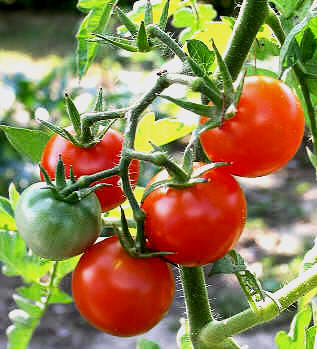
Les tomates sont carnivores


Professor Mark Chase, of Kew and Queen Mary, University of London, said: “The cultivated tomatoes and potatoes still have the hairs. Tomatoes in particular are covered with these sticky hairs. They do trap small insects on a regular basis. They do kill insects.

“We suspect in the domesticated varieties they are getting plenty of food through the roots from us so don’t get much benefit from trapping insects. In the wild they could be functioning in the way that could properly be considered carnivorous.”

Source: http://www.telegraph.co.uk/earth/wildlife/6727709/Tomatoes-can-eat-insects.html


See also:

The attack of the killer tomatoes (1978)http://www.imdb.com/title/tt0080391/


Colonies of a bizarre microbial goo have been found practicing agriculture at a scale tinier than any seen before.


Agriculture has been a large part of the ecological success of humans.

A handful of animals, notably the fungus-growing ants, termites and ambrosia beetles have advanced agriculture that involves dispersal and seeding of food propagules, cultivation of the crop and sustainable harvesting.

More primitive examples, which could be called husbandry because they involve fewer adaptations, include marine snails farming intertidal fungi and damselfish farming algae.
Recent work has shown that microorganisms are surprisingly like animals in having sophisticated behaviours such as cooperation, communication and recognition as well as many kinds of symbiosis.

Here we show that the social amoeba Dictyostelium discoideum has a primitive farming symbiosis that includes dispersal and prudent harvesting of the crop.
 About one-third of wild-collected clones engage in husbandry of bacteria.

Instead of consuming all bacteria in their patch, they stop feeding early and incorporate bacteria into their fruiting bodies.

They then carry bacteria during spore dispersal and can seed a new food crop, which is a major advantage if edible bacteria are lacking at the new site. However, if they arrive at sites already containing appropriate bacteria, the costs of early feeding cessation are not compensated for, which may account for the dichotomous nature of this farming symbiosis. The striking convergent evolution between bacterial husbandry in social amoebas and fungus farming in social insects makes sense because multigenerational benefits of farming go to already established kin groups.

source: http://www.nature.com/nature/journal/v469/n7330/full/nature09668.html


and: http://www.sciencedaily.com/releases/2008/11/081124203654.htm
However, when food supplies run low, they first move toward one another to form an aggregate. Eventually the aggregate forms a multi-cellular organism made up of spores that can survive and reproduce, and dead cells that form a stalk. The stalk to spore ratio is about one to four.


Yellow Slime Mold Timelapse from sesotek on Vimeo.


and: http://www.wired.com/wiredscience/2011/01/bacteria-farming-amoeba/
“If you can pack your food source with you, it’s a serious advantage,” said molecular biologist Debra Brock of Rice University, co-author of the slime mold study, published Jan. 19 in Nature.


6.1.11

Growing food in strange places

Bitter melons wall, TokyoPhoto by Jared Braiterman

'Nothing original about drainpipes,' says Philip. 'We look at all pipes and see them sprouting food. Just pass water along the tube and let the plant roots touch the liquid - they'll take up whatever nutrients they need.' Rowena and Philip Mansfield


from http://www.theecologist.org/how_to_make_a_difference/food_and_gardening/613710/how_to_grow_food_in_strange_places_by_the_experts.html 


see also:
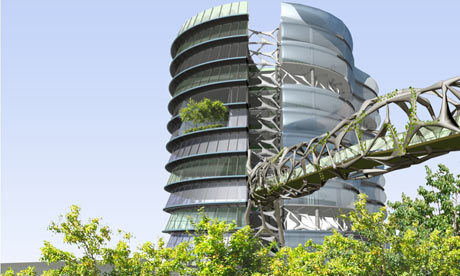
Are vertical farms the future of urban food?

A conceptual illustration of a vertical farm.
Photograph: www.odesign.com.au /Oliver Foster

With more mouths to feed and increasing demands on land, Duncan Graham-Rowe looks to see if high rise city blocks will be the source of tomorrow's supper
via: http://www.guardian.co.uk/environment/2010/jul/29/vertical-farms-urban-food


see also:
Without land, Gaza farmers grow crops on roofs
Eva Bartlett, The Electronic Intifada, 3 December 2010 

BEIT HANOUN, occupied Gaza Strip (IPS) - "We grow on our roof because we are farmers but have no land now," says Moatassan Hamad, 21, from Beit Hanoun in the northern Gaza Strip.
http://electronicintifada.net/v2/article11656.shtml


More interesting links :

City farming :
http://www.youtube.com/watch?v=3KNcl33-XGk

Rain garden :
http://livinglime.ca/2009/04/28/raingutter-gardens/

rooftops :
http://www.cityfarmer.org/TrentRoof.html

Paris :
http://www.evous.fr/Saviez-vous-que-la-Ville-de-Paris,1139540.html

http://www.salon-agriculture.com/Salon/Les-actus-du-salon/Les-actualites-du-salon/L-Odyssee-Vegetale


vine :
http://www.hazelmurray.com/vineyardvision/vineyard-story.php